Wednesday, 29 February 2012

Common Grace and Evangelism (1): Introduction

God is by nature a loving God. He is a gracious God.

This is a foundational truth. This is how God reveals Himself to Moses in Exodus 34:6: "The LORD, the LORD, a God merciful and gracious...". It is what many of the Psalms delight in. Psalm 136 repeatedly tells us "...his steadfast love endures forever." It is what Jonah recognises when he says "...I knew that you are a gracious God and merciful..." (Jonah 4:2). It is what we are told of the Lord Jesus, that He is "...full of grace and truth..." (John 1:14). It is what John recognises when he says: "God is love." (1 John 4:16). God is a gracious God.

What implications does this have for how we speak with our non-Christian friends and family members? How does knowing a gracious God equip us to do evangelism?

In a short series of posts I want to explore this question by looking at a specific aspect of God’s grace, and examining its significance for how we do evangelism. I am going to look at an area of doctrine that theologians call ‘common grace’.

It's always good to be clear on what I'm talking about. So, what do I mean by common grace? A helpful definition of what we mean by common grace is given by the theologian John Murray. He defines common grace like this:
Common grace is “every favour of whatever kind or degree, falling short of salvation, which this undeserving and sin-cursed world enjoys at the hand of God.”
We shall come back to this later. However, before we can explore common grace further and the significance it has for how we do evangelism, we need to recognise something important about human nature first. This is what I want to focus on on this post.

Understanding Ourselves
What we are about to look at in this series of posts will only make sense if we understand something about ourselves first. We won’t be able to grasp God’s common grace, and its implications for evangelism, unless we first recognise what human nature is like.

The Bible teaches that human beings are, by nature, sinful. That is why we sin. We sin because we are sinful by nature. This is a deep problem. Sin has affected the whole of who we are, down to the very root of our being. This is what theologians call ‘total depravity’.
Jesus teaches this in Mark 7:21-22. He says:
"...from within, out of the heart of man, come evil thoughts, sexual immorality, theft, murder, adultery, coveting, wickedness, deceit, sensuality, envy, slander, pride, foolishness. All these things come from within, and they defile a person."
Jesus says that the heart of our problem is our heart. All the evil that humans do comes from the heart. In Bible language, the heart is the control centre of all of who we are. It affects the whole of the rest of our being. Our hearts have been tainted and corrupted by sin, which means that all of the rest of us is also tainted and corrupted by sin.

Ephesians 2:1-3 sheds a little more light on our condition. Paul tells the Christians in Ephesus :
And you were dead in the trespasses and sins in which you once walked, following the course of this world, following the prince of the power of the air, the spirit that is now at work in the sons of disobedience— among whom we all once lived in the passions of our flesh, carrying out the desires of the body and the mind, and were by nature children of wrath, like the rest of mankind.
Notice the imagery here. Paul says that we were dead. We were spiritually dead. Before we became Christians we were spiritual corpses. This means that we were unable to make a single move towards God or think or feel rightly about him. More than this, we couldn’t help but sin. Verses 2-3 say that we actively followed the world, the devil and our sinful desires (which come from our hearts). We were unable to do anything pleasing to God, and were helpless to do anything about it.

Sin has affected the whole of who we are, right down to the very core. So, there is not a part of us that remains uncorrupted by sin. Our minds and thinking, our wills, desires and emotions, all of who we are has been affected. There is not one part of us that we can say, ‘this is alright. We can trust this’.

An Important Question
Now all of this leaves us with a question. It’s a question that is right at the heart of what we are looking at in this series of posts. The question is this:
If this is the case, if sin has affected our whole person, then why is there so much good in the world?
Now, I’m not talking about Christians here. We can understand why Christians do so much good. The Bible tells us that they are ‘new creations’ in Christ (2 Corinthians 5:17). No, the question has got to do with those who are not Christians. How is it that those who are not Christians can do so many good things? Why is it that non-Christians can be faithful husbands, loving parents, good members of society? If ‘total depravity’ is true, then why are unbelievers capable of doing so much good?

The answer to this question is found in what the Bible teaches about God's common grace. This is what we’re going to spend the rest of this series exploring. It is vital that we answer this question rightly, otherwise we could find ourselves wanding down some very unhelpful roads.

Over the next while I shall, God willing, explore this under three headings:
1) God is Gracious to All
2) How God is Gracious to All
3) A Gracious God and Evangelism
For the moment, however, I shall leave you with an unanswered question: How can bad people do good things? That is, if people are totally depraved, why is it that they are capable of so much good?

Tuesday, 28 February 2012

Tuesday Teaching| Learning from C. S. Lewis

A little bit of (quite recent) church history this week. The following video is a talk given by John Piper on the life and thought of C. S. Lewis. Piper draws out some of the significant lessons we can learn from Lewis as Christians today. Enjoy.

Friday, 24 February 2012

"Their best things are yet to come."

J. C. Ryle:
Let it be a settled principle in our minds that the true Christian must always enter the kingdom of God “through much tribulation” (Acts 14:22). Their best things are yet to come. This world is not our home. If we are faithful and decided servants of Christ, the world will certainly hate us, as it hated our Master. In one way or another grace will always be persecuted. No consistency of conduct, however faultless, no kindness and amiability of character, however striking, will exempt a believer from the world’s dislike, so long as they live. It is foolish to be surprised at this. It is mere waste of time to murmur at it. It is a part of the cross, and we must bear it patiently. “Marvel not, my brethren,” says John, “if the world hates you.” “If you were of the world,” says our Lord, “the world would love his own; but because you are not of the world, but I have chosen you out of the world, therefore the world hates you.” (1 John 3:13; John 15:18,19).

Tuesday, 21 February 2012

Tuesday Teaching| 2 Peter (3)

Here is the third and final talk from Dick Lucas in 2 Peter. Enjoy.

Monday, 20 February 2012

'When days of darkness come upon us...'

J. C. Ryle has these helpful words to say about the purpose of suffering in the Christian life:
If we know anything of growth in grace and desire to know more, let us not be surprised if we have to go through much trial and affliction in this world. I firmly believe it is the experience of nearly all the most eminent saints. Like their blessed Master, they have been men of sorrows, acquainted with grief, and perfected through sufferings (Isa. 53:3; Heb. 2:10). It is a striking saying of our Lord, “Every branch in Me that bears fruit [my Father] purges it, that it may bring forth more fruit” (John 15:2).

It is a melancholy fact, that constant temporal prosperity, as a general rule, is injurious to a believer’s soul. We cannot stand it. Sicknesses, losses, crosses, anxieties and disappointments seem absolutely needful to keep us humble, watchful and spiritual–minded. They are as needful as the pruning knife to the vine and the refiner’s furnace to the gold. They are not pleasant to flesh and blood. We do not like them and often do not see their meaning. “No chastening for the present seems to be joyous, but grievous: nevertheless afterward it yields the peaceable fruit of righteousness” (Heb. 12:11).

We shall find that all worked for our good when we reach heaven. Let these thoughts abide in our minds, if we love growth in grace. When days of darkness come upon us, let us not count it a strange thing. Rather let us remember that lessons are learned on such days, which would never have been learned in sunshine. Let us say to ourselves, “This also is for my profit, that I may be a partaker of God’s holiness. It is sent in love. I am in God’s best school. Correction is instruction. This is meant to make me grow.

Wednesday, 15 February 2012

Unhindered

Gone are the days when Christianity was a central part of the fabric of society. We now live in a society that is increasingly opposed to Christian values and practices. Christians face legal action for holding to Bible truth. Prayers are banned in public meetings. It may not be long until Christian ministers are being locked up for speaking about Jesus.

If that day comes, will it not be a tragedy? Will it not greatly hinder our efforts to see our neighbourhood and our nation reached with the gospel?

The book of Acts closes with a man in chains. In chapters 27-28 Paul arrives in Rome as a prisoner. We might expect the book to end on a high note with Paul boldly standing before Caesar and being acquitted before all the watching crowds in this magnificent city. But this does not happen. The book closes and Paul is still in chains. It is not quite the triumphant ending we were hoping for…or is it?

Before we’re tempted to despair, let us recognise that these final two chapters of Acts tell us some very important things:

Heaven is in Control
None of the events that have brought Paul to Rome are an accident. Paul has known the plan since 19:21, and Jesus has reminded him of this in 23:11. Behind all these events is the risen and reigning Lord Jesus. This does not change in the midst of the raging sea. In the midst of the storm of chapter 27, God reminds Paul that “you must stand before Caesar.” (27:24). He will arrive in Rome.

 God delivers Paul, and his fellow passengers, from the storm (27:44), and delivers Paul from a deadly snakebite. Both of these are God’s demonstration that Paul is an innocent man. Therefore, the message he proclaims ought to be listened to.

Paul’s chains and his journey to Rome are not tragic, but are in the hands of an all-powerful God who will ensure that his salvation is sent to the nations (28:28).

The Gospel is Unstoppable
The book closes with Paul still in chains. However, this is not a problem for Paul’s gospel witness. No, it is exactly the opposite! Paul’s chains create even more gospel opportunities. He has opportunity to speak to the Jews, and the final image of the book is of Paul preaching the gospel “with all boldness and without hindrance.” (28:31).

Paul’s message has been rejected by the Jews (28:25-28), and he has still not been released. Yet this is not a tragedy. No, it is a triumph. In the face of all this opposition, the gospel continues to go out unhindered.


The book of Acts closes in triumph. The gospel of the risen and reigning Lord Jesus continues to advance unhindered. Is this not a great encouragement to us in our times? Heaven is in control and the gospel is unstoppable. No power can stop the advance of the unhindered gospel. Neither the Roman empire, nor Bideford town council.

Tuesday, 14 February 2012

Tuesday Teaching| 2 Peter (2)

Last week we began a three week series in the small but important book of 2 Peter with Dick Lucas. We continue this week with the second talk from the series.

Monday, 13 February 2012

Without Money and Arms


Philip Schaff:
Jesus of Nazareth, without money and arms, conquered more millions than Alexander, Caesar, Mahomet, and Napoleon; without science and learning, He shed more light on things human and divine than all philosophers and schools combined; without the eloquence of schools, He spoke words of life such as never were spoken before or since, and produced effects which lie beyond the reach of any orator or poet; without writing a single line, He has set more pens in motion, and furnished themes for more sermons, orations, discussions, learned volumes, works of art and sweet songs of praise, than the whole army of great men of ancient and modern times. Born in a manger, and crucified as a malefactor, He now controls the destinies of the civilized world, and rules a spiritual empire which embraces one-third of the inhabitants of the globe. There never was in this world a life so unpretending, modest, and lowly in its outward form and condition, and yet producing such extraordinary effects upon all ages, nations, and classes of men. The annals of history produce no other example of such complete and astonishing success in spite of the absence of those material, social, literary, and artistic powers and influences which are indispensable to success for a mere man.

Thursday, 9 February 2012

Memories

What's the point of memory? Is it really all that important?

Of the many things that new technologies do for us is that they remember things for us. No longer do we need to memorise a friend's phone number (or even your own!), with a couple of button presses it comes up on the screen of our mobile phone. No longer do we need to remember directions when we are driving, TomTom the sat-nav will tell us step by step where to go. Our technologies do our remembering for us!

Immediately we can see the many benefits of this. In many ways these memory-boosting technologies can make life much easier. We can be more organised, accurate and speedy. However, for all the benefits that this brings to us, there are many serious implications that relying on technology to remember things do for us. One of the things that these new technologies do is to seek to make our memories redundant. The more we 'outsource' our memories to technology, the less use we make of our faculties of memory and the more flabby it becomes. This has serious implications for our lives. Implications which we may not be aware of.

Tim Challies has written a helpful and thought-provoking post on the implications of 'outsourcing' our memories. He argues that empty minds lead to empty hearts which lead to empty lives. Towards the end of his post he says:
“Those who celebrate the ‘outsourcing’ of memory to the web have been misled by a metaphor. They overlook the fundamentally organic nature of biological memory. What gives real memory its richness and its character, not to mention its mystery and fragility, is its contingency. It exists in time, changing as the body changes.” Where a computer takes in information and immediately stores it as data, the human brain continues to process that information and turn it into a form of knowledge. Biological memory is a living memory; computer memory is not.
What is committed to memory, what is installed there through the labor of memorization, is of special significance. We commit Scripture to memory, not as a functional habit, but because the discipline of memorizing it forces us to meditate on it and allows us to call it to mind at any time. Putting it into our brains aids us as we seek to put it into our hearts, understand it in a more holistic sense than mere data, and then live it out through our lives. We commit favorite poems to memory because we can then recall them at opportune times as we revel in their beauty. We stare at our loved ones, memorizing their features, noticing the little details, building a picture of them in our minds and in our memories.

But as we outsource our brains to digital media, we threaten our ability to make information into knowledge and knowledge into wisdom. We train ourselves, not to remember, but to forget. Empty minds will beget empty hearts and empty lives.
You can read the whole of his article by clicking here.

Tuesday, 7 February 2012

Tuesday Teaching| 2 Peter (1)

This week we begin a new series of Tuesday Teaching posts. Over the next three weeks I'm going to post a series of sermons from Dick Lucas from 2 Peter, given at a recent Proclamation Trust conference.

Tuesday, 31 January 2012

Tuesday Teaching| Hosea 14 - 'Return to the Lord'

We come to the final sermon in our series in the book of Hosea with Philip Jensen. We're in Hosea 14.


Phillip Jensen - Hosea 14 from Audio Advice on Vimeo.

Monday, 30 January 2012

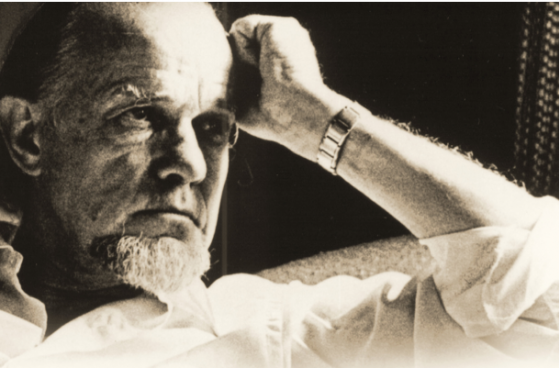
Happy 100th Birthday!

Today marks 100 years since the birth of Francis Scaeffer. A number of articles have been written to mark this occasion and show the significance of his life and thought. Here are just a few of them:
Happy Reading!

Friday, 27 January 2012

Not an Atom More or Less

Charles Spurgeon:
I believe that every particle of dust that dances in the sunbeam does not move an atom more or less than God wishes—
that every particle of spray that dashes against the steamboat has its orbit, as well as the sun in the heavens—
that the chaff from the hand of the winnower is steered as the stars in their courses.
The creeping of an aphid over the rosebud is as much fixed as the march of the devastating pestilence—
the fall of sere leaves from a poplar is as fully ordained as the tumbling of an avalanche.

Thursday, 26 January 2012

Wednesday, 25 January 2012

The Supreme Expression of Our Faith

What does a faith-filled Christian look like? What is it that shows that a persons faith is in God, and that they are confidently trusting in all that He has promised?

Martyn Lloyd-Jones' answer is that a faith-filled Christian is a praying Christian. He sees prayer as the greatest expression of our faith, when he says:
Prayer, in many ways, is the supreme expression of our faith in God and our faith and confidence in the promises of God. There is nothing that a man ever does which so proclaims his faith as when he gets down on his knees and looks to God and talks to God. It is a tremendous confession of faith. I mean by this that he is not just running with his requests and petitions, but if he really waits upon God, if he really looks to God, he is there saying, ‘Yes, I believe it all, I believe that you are a rewarder of them that diligently seek you, I believe you are the Creator of all things and all things are in your hands. I know there is nothing outside of your control. I come to you because you are in all this and I find peace and rest and quiet in your holy presence and I am praying to you because you are what you are.’ That is the whole approach to prayer that you find in the teaching of Scripture.

Tuesday, 24 January 2012

Tuesday Teaching| Hosea 13 - 'The Only Saviour'

We come now to the penultimate video in our series in the book of Hosea. This week we are in Hosea 13, where we see 'The Only Saviour'.

Monday, 23 January 2012

"Grave and Serious, Though Cheerful and Pleasant."

Recently I came across this quote by Albert Barnes through Tim Challies. Barnes is here speaking about the Christian demeanour, and how we carry ourselves through life, he says:
Christians should be grave and serious, though cheerful and pleasant. They should feel that they have great interests at stake, and that the world has too. They are redeemed—not to make sport; purchased with precious blood—for other purposes than to make men laugh. They are soon to be in heaven—and a man who has any impressive sense of that will habitually feel he has much else to do than to make men laugh. The true course of life is midway between moroseness and levity; sourness and lightness; harshness and jesting.  Be benevolent, kind, cheerful, bland, courteous—but serious. Be solemn, thoughtful, deeply impressed with the presence of God and with eternal things—but pleasant affable and benignant. Think not a smile sinful; but think not levity and jesting harmless.
It's worth giving thought to this. I guess most of us will incline to extreme or the other. Barnes calls us to neither extreme, but to be both serious and cheerful. It is worth being aware which direction we naturally move towards, so that we might be able to correct ourselves. To those of us inclined to be more serious, we need to be exhorted not to forget joyfulness and cheerfulness. To those of us inclined to the other extreme, we need to be exhorted to more serious thought, reflection and conversation.

This is worth thinking about because our demenour not only effects us, but also has a lasting impact on those around us. What does a joyful seriousness or a grave cheerfulness look like? What impact would such a demeanour have on those around us? I don't pretend to have all the answers, but it is something worth thinking about, and is perhaps something that we've not thought much about before.

Thursday, 19 January 2012

Influencing a Younger Christian

What influence are you having on younger Christians? The influence we have on those who are our younger brothers and sisters in Christ is not neutral. Either we are encouraging them to grow in loving Jesus all the more deeply, or we are encouraging them to increasingly love other things. It is therefore vitally important that we think through what kind of influence we are having.

Don Carson points out one important aspect of being godly influence on a younger Christian. He says:
If I have learned anything in 35 or 40 years of teaching, it is that students don’t learn everything I teach them. What they learn is what I am excited about, the kinds of things I emphasize again and again and again and again. That had better be the gospel.


If the gospel—even when you are orthodox—becomes something which you primarily assume, but what you are excited about is what you are doing in some sort of social reconstruction, you will be teaching the people that you influence that the gospel really isn’t all that important. You won’t be saying that—you won’t even mean that—but that’s what you will be teaching. And then you are only half a generation away from losing the gospel.

Make sure that in your own practice and excitement, what you talk about, what you think about, what you pray over, what you exude confidence over, joy over, what you are enthusiastic about is Jesus, the gospel, the cross. And out of that framework, by all means, let the transformed life flow.

Tuesday, 17 January 2012

Tuesday Teaching| Hosea 12 - 'Claiming the Heritage'

This week we're in Hosea 12 as we continue to work through the book of Hosea with Philip Jensen.


Phillip Jensen - Hosea 12 from Audio Advice on Vimeo.