Thursday, 8 March 2012

Common Grace and Evangelism (2): A Gracious God

If sin has affected human beings right down to the core of who they are, then why is there so much good in the world?

This is the question we were left with at the end of the previous post. Over the next couple of posts we are going to answer this crucial question as we explore the Bible's teaching on common grace. In a final post we shall tie things together by looking at the implications our answer has on how we do evangelism.

The first thing we need to do is to establish an important truth about God. That God is a gracious God.

God is Gracious to All
As we turn to the pages of the Bible we see that God is a God who is gracious to all that he has made.

Psalm 145:9 tells us: "The LORD is good to all, and his mercy is over all that he has made." That’s pretty comprehensive! He is good to all, to all people. More than that, He is good to all of his creation. He has compassion on all that he has made. Notice that this is a goodness that he shows both to those who are his people, and to those who are not.

Consider Matthew 5:45, where Jesus tells His disciples that "your Father who is in heaven...makes his sun rise on the evil and on the good, and sends rain on the just and on the unjust." God gives the blessings of sun and rain to the righteous and the unrighteous. Sun and rain are a sign of God’s goodness and favour. Notice how he shows this goodness and favour both to those who are his people and those who are not his people. He is gracious to both the Christian and to the non-Christian.

There are plenty more passages we could look at (such as Luke 6:35; Acts 14:17; 17:30). What we see, from this short study is that the Bible affirms that God shows undeserved kindness to all people. This includes both those who are his people and those who are not.

An Important Distinction
Now, we need to be clear here. The fact that God is gracious both to the believer and the unbeliever does not mean that all people will be saved. The Bible does not teach this.

Before the world was created, God chose some to be saved and others for destruction (See Romans 9:21-23; Ephesians 1:3-10). This means that some receive the special grace of God’s salvation, and others do not. However, at the same time we must affirm that he is gracious to all, even to those who will eventually end up in hell.

This means that we need to make a distinction: A distinction between what theologians call ‘common' grace and ‘saving' or 'special' grace. Common grace is a grace that God shows to all people whether Christian or non-Christian, saving grace is a grace that only those whom He has chosen will experience. Our focus in this series of posts is on ‘common grace’.

In this post we’ve laid an important foundation, and have shown that God is gracious to all people (and indeed all of his creation) with a common grace. In the next post I shall look at one particular aspect of how he shows this common grace. It is there that we shall begin to see more clearly the answer to the question of how totally depraved people can do so many good things.

Tuesday, 6 March 2012

Tuesday Teaching| The Trinity (1)

The following is the first of three talks on the doctrine of the Trinity, given by Carl Trueman at a Proclamation Trust minister's conference. The talks are a bit more brain-stretching than usual, but well worth the extra effort!


Thursday, 1 March 2012

Saturated with the Gospel

Charles Spurgeon gave this call to fellow ministers:
One thing more, and it is this. Let us, dear brethren, try to get saturated with the gospel. I always find that I can preach best when I can manage to lie a-soak in my text. I like to get a text, and find out its meaning and bearings, and so on; and then, after I have bathed in it, I delight to lie down in it, and let it soak into me. It softens me, or hardens me, or does whatever it ought to do to me, and then I can talk about it. You need not be very particular about the words and phrases if the spirit of the text has filled you; thoughts will leap out, and find raiment for themselves. Become saturated with spices, and you will smell of them; a sweet perfume will distill from you, and spread itself in every direction; — we call it unction. Do you not love to listen to a brother who abides in fellowship with the Lord Jesus? Even a few minutes with such a man is refreshing, for, like his Master, his paths drop fatness. Dwell in the truth, and let the truth dwell in you. Be baptized into its spirit and influence, that you may impart thereof to others. If you do not believe the gospel, do not preach it, for you lack an essential qualification; but even if you do believe it, do not preach it until you have taken it up into yourself as the wick takes up the oil. So only can you be a burning and a shining light.

Wednesday, 29 February 2012

Common Grace and Evangelism (1): Introduction

God is by nature a loving God. He is a gracious God.

This is a foundational truth. This is how God reveals Himself to Moses in Exodus 34:6: "The LORD, the LORD, a God merciful and gracious...". It is what many of the Psalms delight in. Psalm 136 repeatedly tells us "...his steadfast love endures forever." It is what Jonah recognises when he says "...I knew that you are a gracious God and merciful..." (Jonah 4:2). It is what we are told of the Lord Jesus, that He is "...full of grace and truth..." (John 1:14). It is what John recognises when he says: "God is love." (1 John 4:16). God is a gracious God.

What implications does this have for how we speak with our non-Christian friends and family members? How does knowing a gracious God equip us to do evangelism?

In a short series of posts I want to explore this question by looking at a specific aspect of God’s grace, and examining its significance for how we do evangelism. I am going to look at an area of doctrine that theologians call ‘common grace’.

It's always good to be clear on what I'm talking about. So, what do I mean by common grace? A helpful definition of what we mean by common grace is given by the theologian John Murray. He defines common grace like this:
Common grace is “every favour of whatever kind or degree, falling short of salvation, which this undeserving and sin-cursed world enjoys at the hand of God.”
We shall come back to this later. However, before we can explore common grace further and the significance it has for how we do evangelism, we need to recognise something important about human nature first. This is what I want to focus on on this post.

Understanding Ourselves
What we are about to look at in this series of posts will only make sense if we understand something about ourselves first. We won’t be able to grasp God’s common grace, and its implications for evangelism, unless we first recognise what human nature is like.

The Bible teaches that human beings are, by nature, sinful. That is why we sin. We sin because we are sinful by nature. This is a deep problem. Sin has affected the whole of who we are, down to the very root of our being. This is what theologians call ‘total depravity’.
Jesus teaches this in Mark 7:21-22. He says:
"...from within, out of the heart of man, come evil thoughts, sexual immorality, theft, murder, adultery, coveting, wickedness, deceit, sensuality, envy, slander, pride, foolishness. All these things come from within, and they defile a person."
Jesus says that the heart of our problem is our heart. All the evil that humans do comes from the heart. In Bible language, the heart is the control centre of all of who we are. It affects the whole of the rest of our being. Our hearts have been tainted and corrupted by sin, which means that all of the rest of us is also tainted and corrupted by sin.

Ephesians 2:1-3 sheds a little more light on our condition. Paul tells the Christians in Ephesus :
And you were dead in the trespasses and sins in which you once walked, following the course of this world, following the prince of the power of the air, the spirit that is now at work in the sons of disobedience— among whom we all once lived in the passions of our flesh, carrying out the desires of the body and the mind, and were by nature children of wrath, like the rest of mankind.
Notice the imagery here. Paul says that we were dead. We were spiritually dead. Before we became Christians we were spiritual corpses. This means that we were unable to make a single move towards God or think or feel rightly about him. More than this, we couldn’t help but sin. Verses 2-3 say that we actively followed the world, the devil and our sinful desires (which come from our hearts). We were unable to do anything pleasing to God, and were helpless to do anything about it.

Sin has affected the whole of who we are, right down to the very core. So, there is not a part of us that remains uncorrupted by sin. Our minds and thinking, our wills, desires and emotions, all of who we are has been affected. There is not one part of us that we can say, ‘this is alright. We can trust this’.

An Important Question
Now all of this leaves us with a question. It’s a question that is right at the heart of what we are looking at in this series of posts. The question is this:
If this is the case, if sin has affected our whole person, then why is there so much good in the world?
Now, I’m not talking about Christians here. We can understand why Christians do so much good. The Bible tells us that they are ‘new creations’ in Christ (2 Corinthians 5:17). No, the question has got to do with those who are not Christians. How is it that those who are not Christians can do so many good things? Why is it that non-Christians can be faithful husbands, loving parents, good members of society? If ‘total depravity’ is true, then why are unbelievers capable of doing so much good?

The answer to this question is found in what the Bible teaches about God's common grace. This is what we’re going to spend the rest of this series exploring. It is vital that we answer this question rightly, otherwise we could find ourselves wanding down some very unhelpful roads.

Over the next while I shall, God willing, explore this under three headings:
1) God is Gracious to All
2) How God is Gracious to All
3) A Gracious God and Evangelism
For the moment, however, I shall leave you with an unanswered question: How can bad people do good things? That is, if people are totally depraved, why is it that they are capable of so much good?

Tuesday, 28 February 2012

Tuesday Teaching| Learning from C. S. Lewis

A little bit of (quite recent) church history this week. The following video is a talk given by John Piper on the life and thought of C. S. Lewis. Piper draws out some of the significant lessons we can learn from Lewis as Christians today. Enjoy.

Friday, 24 February 2012

"Their best things are yet to come."

J. C. Ryle:
Let it be a settled principle in our minds that the true Christian must always enter the kingdom of God “through much tribulation” (Acts 14:22). Their best things are yet to come. This world is not our home. If we are faithful and decided servants of Christ, the world will certainly hate us, as it hated our Master. In one way or another grace will always be persecuted. No consistency of conduct, however faultless, no kindness and amiability of character, however striking, will exempt a believer from the world’s dislike, so long as they live. It is foolish to be surprised at this. It is mere waste of time to murmur at it. It is a part of the cross, and we must bear it patiently. “Marvel not, my brethren,” says John, “if the world hates you.” “If you were of the world,” says our Lord, “the world would love his own; but because you are not of the world, but I have chosen you out of the world, therefore the world hates you.” (1 John 3:13; John 15:18,19).

Tuesday, 21 February 2012

Tuesday Teaching| 2 Peter (3)

Here is the third and final talk from Dick Lucas in 2 Peter. Enjoy.

Monday, 20 February 2012

'When days of darkness come upon us...'

J. C. Ryle has these helpful words to say about the purpose of suffering in the Christian life:
If we know anything of growth in grace and desire to know more, let us not be surprised if we have to go through much trial and affliction in this world. I firmly believe it is the experience of nearly all the most eminent saints. Like their blessed Master, they have been men of sorrows, acquainted with grief, and perfected through sufferings (Isa. 53:3; Heb. 2:10). It is a striking saying of our Lord, “Every branch in Me that bears fruit [my Father] purges it, that it may bring forth more fruit” (John 15:2).

It is a melancholy fact, that constant temporal prosperity, as a general rule, is injurious to a believer’s soul. We cannot stand it. Sicknesses, losses, crosses, anxieties and disappointments seem absolutely needful to keep us humble, watchful and spiritual–minded. They are as needful as the pruning knife to the vine and the refiner’s furnace to the gold. They are not pleasant to flesh and blood. We do not like them and often do not see their meaning. “No chastening for the present seems to be joyous, but grievous: nevertheless afterward it yields the peaceable fruit of righteousness” (Heb. 12:11).

We shall find that all worked for our good when we reach heaven. Let these thoughts abide in our minds, if we love growth in grace. When days of darkness come upon us, let us not count it a strange thing. Rather let us remember that lessons are learned on such days, which would never have been learned in sunshine. Let us say to ourselves, “This also is for my profit, that I may be a partaker of God’s holiness. It is sent in love. I am in God’s best school. Correction is instruction. This is meant to make me grow.

Wednesday, 15 February 2012

Unhindered

Gone are the days when Christianity was a central part of the fabric of society. We now live in a society that is increasingly opposed to Christian values and practices. Christians face legal action for holding to Bible truth. Prayers are banned in public meetings. It may not be long until Christian ministers are being locked up for speaking about Jesus.

If that day comes, will it not be a tragedy? Will it not greatly hinder our efforts to see our neighbourhood and our nation reached with the gospel?

The book of Acts closes with a man in chains. In chapters 27-28 Paul arrives in Rome as a prisoner. We might expect the book to end on a high note with Paul boldly standing before Caesar and being acquitted before all the watching crowds in this magnificent city. But this does not happen. The book closes and Paul is still in chains. It is not quite the triumphant ending we were hoping for…or is it?

Before we’re tempted to despair, let us recognise that these final two chapters of Acts tell us some very important things:

Heaven is in Control
None of the events that have brought Paul to Rome are an accident. Paul has known the plan since 19:21, and Jesus has reminded him of this in 23:11. Behind all these events is the risen and reigning Lord Jesus. This does not change in the midst of the raging sea. In the midst of the storm of chapter 27, God reminds Paul that “you must stand before Caesar.” (27:24). He will arrive in Rome.

 God delivers Paul, and his fellow passengers, from the storm (27:44), and delivers Paul from a deadly snakebite. Both of these are God’s demonstration that Paul is an innocent man. Therefore, the message he proclaims ought to be listened to.

Paul’s chains and his journey to Rome are not tragic, but are in the hands of an all-powerful God who will ensure that his salvation is sent to the nations (28:28).

The Gospel is Unstoppable
The book closes with Paul still in chains. However, this is not a problem for Paul’s gospel witness. No, it is exactly the opposite! Paul’s chains create even more gospel opportunities. He has opportunity to speak to the Jews, and the final image of the book is of Paul preaching the gospel “with all boldness and without hindrance.” (28:31).

Paul’s message has been rejected by the Jews (28:25-28), and he has still not been released. Yet this is not a tragedy. No, it is a triumph. In the face of all this opposition, the gospel continues to go out unhindered.


The book of Acts closes in triumph. The gospel of the risen and reigning Lord Jesus continues to advance unhindered. Is this not a great encouragement to us in our times? Heaven is in control and the gospel is unstoppable. No power can stop the advance of the unhindered gospel. Neither the Roman empire, nor Bideford town council.

Tuesday, 14 February 2012

Tuesday Teaching| 2 Peter (2)

Last week we began a three week series in the small but important book of 2 Peter with Dick Lucas. We continue this week with the second talk from the series.

Monday, 13 February 2012

Without Money and Arms


Philip Schaff:
Jesus of Nazareth, without money and arms, conquered more millions than Alexander, Caesar, Mahomet, and Napoleon; without science and learning, He shed more light on things human and divine than all philosophers and schools combined; without the eloquence of schools, He spoke words of life such as never were spoken before or since, and produced effects which lie beyond the reach of any orator or poet; without writing a single line, He has set more pens in motion, and furnished themes for more sermons, orations, discussions, learned volumes, works of art and sweet songs of praise, than the whole army of great men of ancient and modern times. Born in a manger, and crucified as a malefactor, He now controls the destinies of the civilized world, and rules a spiritual empire which embraces one-third of the inhabitants of the globe. There never was in this world a life so unpretending, modest, and lowly in its outward form and condition, and yet producing such extraordinary effects upon all ages, nations, and classes of men. The annals of history produce no other example of such complete and astonishing success in spite of the absence of those material, social, literary, and artistic powers and influences which are indispensable to success for a mere man.

Thursday, 9 February 2012

Memories

What's the point of memory? Is it really all that important?

Of the many things that new technologies do for us is that they remember things for us. No longer do we need to memorise a friend's phone number (or even your own!), with a couple of button presses it comes up on the screen of our mobile phone. No longer do we need to remember directions when we are driving, TomTom the sat-nav will tell us step by step where to go. Our technologies do our remembering for us!

Immediately we can see the many benefits of this. In many ways these memory-boosting technologies can make life much easier. We can be more organised, accurate and speedy. However, for all the benefits that this brings to us, there are many serious implications that relying on technology to remember things do for us. One of the things that these new technologies do is to seek to make our memories redundant. The more we 'outsource' our memories to technology, the less use we make of our faculties of memory and the more flabby it becomes. This has serious implications for our lives. Implications which we may not be aware of.

Tim Challies has written a helpful and thought-provoking post on the implications of 'outsourcing' our memories. He argues that empty minds lead to empty hearts which lead to empty lives. Towards the end of his post he says:
“Those who celebrate the ‘outsourcing’ of memory to the web have been misled by a metaphor. They overlook the fundamentally organic nature of biological memory. What gives real memory its richness and its character, not to mention its mystery and fragility, is its contingency. It exists in time, changing as the body changes.” Where a computer takes in information and immediately stores it as data, the human brain continues to process that information and turn it into a form of knowledge. Biological memory is a living memory; computer memory is not.
What is committed to memory, what is installed there through the labor of memorization, is of special significance. We commit Scripture to memory, not as a functional habit, but because the discipline of memorizing it forces us to meditate on it and allows us to call it to mind at any time. Putting it into our brains aids us as we seek to put it into our hearts, understand it in a more holistic sense than mere data, and then live it out through our lives. We commit favorite poems to memory because we can then recall them at opportune times as we revel in their beauty. We stare at our loved ones, memorizing their features, noticing the little details, building a picture of them in our minds and in our memories.

But as we outsource our brains to digital media, we threaten our ability to make information into knowledge and knowledge into wisdom. We train ourselves, not to remember, but to forget. Empty minds will beget empty hearts and empty lives.
You can read the whole of his article by clicking here.

Tuesday, 7 February 2012

Tuesday Teaching| 2 Peter (1)

This week we begin a new series of Tuesday Teaching posts. Over the next three weeks I'm going to post a series of sermons from Dick Lucas from 2 Peter, given at a recent Proclamation Trust conference.

Tuesday, 31 January 2012

Tuesday Teaching| Hosea 14 - 'Return to the Lord'

We come to the final sermon in our series in the book of Hosea with Philip Jensen. We're in Hosea 14.


Phillip Jensen - Hosea 14 from Audio Advice on Vimeo.

Monday, 30 January 2012

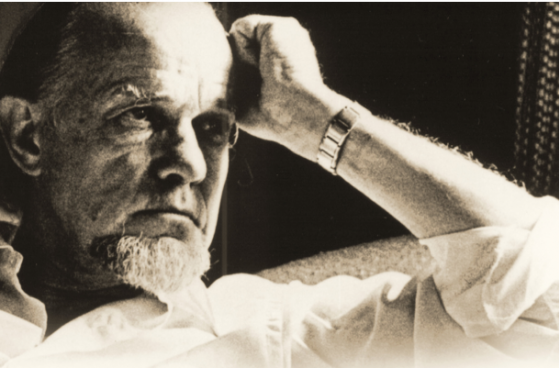
Happy 100th Birthday!

Today marks 100 years since the birth of Francis Scaeffer. A number of articles have been written to mark this occasion and show the significance of his life and thought. Here are just a few of them:
Happy Reading!

Friday, 27 January 2012

Not an Atom More or Less

Charles Spurgeon:
I believe that every particle of dust that dances in the sunbeam does not move an atom more or less than God wishes—
that every particle of spray that dashes against the steamboat has its orbit, as well as the sun in the heavens—
that the chaff from the hand of the winnower is steered as the stars in their courses.
The creeping of an aphid over the rosebud is as much fixed as the march of the devastating pestilence—
the fall of sere leaves from a poplar is as fully ordained as the tumbling of an avalanche.

Thursday, 26 January 2012

Wednesday, 25 January 2012

The Supreme Expression of Our Faith

What does a faith-filled Christian look like? What is it that shows that a persons faith is in God, and that they are confidently trusting in all that He has promised?

Martyn Lloyd-Jones' answer is that a faith-filled Christian is a praying Christian. He sees prayer as the greatest expression of our faith, when he says:
Prayer, in many ways, is the supreme expression of our faith in God and our faith and confidence in the promises of God. There is nothing that a man ever does which so proclaims his faith as when he gets down on his knees and looks to God and talks to God. It is a tremendous confession of faith. I mean by this that he is not just running with his requests and petitions, but if he really waits upon God, if he really looks to God, he is there saying, ‘Yes, I believe it all, I believe that you are a rewarder of them that diligently seek you, I believe you are the Creator of all things and all things are in your hands. I know there is nothing outside of your control. I come to you because you are in all this and I find peace and rest and quiet in your holy presence and I am praying to you because you are what you are.’ That is the whole approach to prayer that you find in the teaching of Scripture.

Tuesday, 24 January 2012

Tuesday Teaching| Hosea 13 - 'The Only Saviour'

We come now to the penultimate video in our series in the book of Hosea. This week we are in Hosea 13, where we see 'The Only Saviour'.

Monday, 23 January 2012

"Grave and Serious, Though Cheerful and Pleasant."

Recently I came across this quote by Albert Barnes through Tim Challies. Barnes is here speaking about the Christian demeanour, and how we carry ourselves through life, he says:
Christians should be grave and serious, though cheerful and pleasant. They should feel that they have great interests at stake, and that the world has too. They are redeemed—not to make sport; purchased with precious blood—for other purposes than to make men laugh. They are soon to be in heaven—and a man who has any impressive sense of that will habitually feel he has much else to do than to make men laugh. The true course of life is midway between moroseness and levity; sourness and lightness; harshness and jesting.  Be benevolent, kind, cheerful, bland, courteous—but serious. Be solemn, thoughtful, deeply impressed with the presence of God and with eternal things—but pleasant affable and benignant. Think not a smile sinful; but think not levity and jesting harmless.
It's worth giving thought to this. I guess most of us will incline to extreme or the other. Barnes calls us to neither extreme, but to be both serious and cheerful. It is worth being aware which direction we naturally move towards, so that we might be able to correct ourselves. To those of us inclined to be more serious, we need to be exhorted not to forget joyfulness and cheerfulness. To those of us inclined to the other extreme, we need to be exhorted to more serious thought, reflection and conversation.

This is worth thinking about because our demenour not only effects us, but also has a lasting impact on those around us. What does a joyful seriousness or a grave cheerfulness look like? What impact would such a demeanour have on those around us? I don't pretend to have all the answers, but it is something worth thinking about, and is perhaps something that we've not thought much about before.

Thursday, 19 January 2012

Influencing a Younger Christian

What influence are you having on younger Christians? The influence we have on those who are our younger brothers and sisters in Christ is not neutral. Either we are encouraging them to grow in loving Jesus all the more deeply, or we are encouraging them to increasingly love other things. It is therefore vitally important that we think through what kind of influence we are having.

Don Carson points out one important aspect of being godly influence on a younger Christian. He says:
If I have learned anything in 35 or 40 years of teaching, it is that students don’t learn everything I teach them. What they learn is what I am excited about, the kinds of things I emphasize again and again and again and again. That had better be the gospel.


If the gospel—even when you are orthodox—becomes something which you primarily assume, but what you are excited about is what you are doing in some sort of social reconstruction, you will be teaching the people that you influence that the gospel really isn’t all that important. You won’t be saying that—you won’t even mean that—but that’s what you will be teaching. And then you are only half a generation away from losing the gospel.

Make sure that in your own practice and excitement, what you talk about, what you think about, what you pray over, what you exude confidence over, joy over, what you are enthusiastic about is Jesus, the gospel, the cross. And out of that framework, by all means, let the transformed life flow.

Tuesday, 17 January 2012

Tuesday Teaching| Hosea 12 - 'Claiming the Heritage'

This week we're in Hosea 12 as we continue to work through the book of Hosea with Philip Jensen.


Phillip Jensen - Hosea 12 from Audio Advice on Vimeo.

Monday, 16 January 2012

Technology and Your Brain

Recently I read Tim Challies' excellent book The Next Story. Tim helpfully navigates us through the impact technology is having on us and the world around us, and helps us to think about how we live faithfully in a world that has been shaped by the digital explosion. It has greatly helped me think biblically about the technology that is increasingly becoming part of our everyday lives, and has challenged me to be more discerning and deliberate about how I use technology and guard against 'being owned' by technology.

Mike Wittmer has written a short post on what technology is doing to us, how it is affecting and changing us. If we are not careful, technology could have a serious effect on our Christian lives without us realising it. Mike's article is worth reading as a spur to getting down to some serious thinking about technology and the Christian life. You can read his article by clicking here. He lists five big things he's learnt from the reading and thinking he's done on what technology is doing to us:
1) It does not connect us as much as we think
2) The internet is giving us Attention Deficit Disorder
3) Google encourages distraction rather than reflection
4) The internet is destroying our memories
5) The internet never forgets
Immediately we can see that this has major implications for our Christian lives. Think about it. If the internet affetcs our attention, distractedness and memories, then surely this will have serious problems for as as we try to seriously and thoughtfully meditate on and memorise Scripture. If technology does not connect us as much as we think, but disconnects us, shurely this will have serious implications for building Christian community in our local churches.

Tuesday, 10 January 2012

Tuesday Teaching| Hosea 11 - 'The Lord Who Loves'

We continue with our series in the book of Hosea with Philip Jensen. This week we're in Hosea 11, where we see The Lord Who Loves.


Phillip Jensen - Hosea 11 from Audio Advice on Vimeo.

Monday, 9 January 2012

What's the Difference?

The following video is a discussion between John Piper and Darrin Patrick on what the Bible teaches about manhood and womanhood. That is, what it means to be a man, and not a woman; and what it means to be a woman, and not a man. This is a very helpful short video and well worth the 15 minutes it will take to watch this.

Thursday, 5 January 2012

Why the Church is So Important

Some helpful thoughts from Simon Austen on why the church is so important in God's purposes:
It is both humbling and exhilarating to think that the local fellowships of believers, of which we are all a part, are pictures of what God is going to do in eternity. Until that day when the new heavens and earth are created and the visible unity God purposes are seen in their fullness and glory, the only visual point of contact between the heavenly realms and the earthly realms is the church. That is why church is so important and why church is so difficult. Satan does not want the church to be what we are – for when we live rightly, then it becomes apparent to Satan that his days are numbered, and to the world that the power and purposes of God are in operation. As we love one another and live as the church, the world sees that we are disciples and the principalities and powers get a foretaste of their future destruction.

Tuesday, 3 January 2012

Tuesday Teaching| Hosea 10 - 'The End of Affluence'

Happy new year! It's a Tuesday morning, and we're going to continue where we left off last year in the book of Hosea with Philip Jensen, as we get back into our regular Tuesday Teaching posts. This week we're in Hosea 10.

Friday, 30 December 2011

Reading the Bible in 2012

January 1st is a coming, and it is about this time of year that people start making plans to read through the Bible in a year. There are many fantastic resources out there to help us do this. In this post I want to point you to some of these great resources, and encourage you, if you've not thought about it or ever tried it, to consider making 2012 a year in which you commit to reading throught the whole Bible.

Personally, I'm greatly indebted to Robert Murray M'Cheyne for his Bible reading plan, which takes you through the Old Testament once and the New Testament and Psalms twice in a year. You can view the plan with M'Cheyne's instructions here or get hold of a PDF copy of the plan here. I posted an edited and easier to read version of M'Cheynes introduction on the blessings and dangers of reading the Bible in a year this time last year. You can read it here. Don Carson has written two volumes of daily comments and reflections on each days reading from M'Cheyne's plan you can buy them in here and here, or view it online for free here.

However, there are lots more great plans out there if you find that M'Cheyne's doesn't work for you. Both Justin Taylor over at the Gospel Coalition and Jean Williams at the Briefing have written posts with links to a wealth of great resources for reading the Bible in a year. There are many differing plans that will suit different people and their differing situations. If is well worth looking through their suggestions as you make plans for your 2012 Bible reading. You can view them by clicking the links below:
I pray that these resources will be of great help, and serve you in digging deep into the riches of God's word in 2012.

Wednesday, 21 December 2011

Have a Christ-Centred Christmas

He will be great and will be called the Son of the Most High. And the Lord God will give to him the throne of his father David, and he will reign over the house of Jacob for ever, and of his kingdom there will be no end. (Luke 1:32-33)

I'm going to be taking a break from the blog over Christmas. So, no posts until late next week. Let me take this opportunity to wish all our readers a Christ-centred Christmas. Have a great time rejoicing in our magnificent Saviour.

Tuesday, 20 December 2011

Tuesday Teaching| The Child to be Born Will be Called Holy

In view of the fact that today is the last Tuesday before Christmas, we're taking a break from our series in Hosea to listen to something focussed on what we celebrate at Christmas, the coming into the world as a man of the king who shall reign forever. This week our Tuesday Teaching video is a sermon in Luke 1:26-38 from John Piper.

Monday, 19 December 2011

Which Gospel Will Shape Your Christmas?

You know it's December when the TV shedules are once again brimming with Christmas movies. Recently I watched the film Elf. The climax of the movie sees some of the main characters 'spreading Christmas cheer by singing loud for all to hear' outside Central Park in New York. The song they choose let rip with their vocal chords on is Santa Claus is Coming to Town. It is at this point that the uplifting music begins to swell and the audience is left with that warm joyful Christmas feeling.

Yet, as I think about it, I can't help but be reminded that the message of Santa Claus is Coming to Town does not leave us with Christmas cheer. In fact if we take the message of the song seriously we are only left with despair.

Now before I'm berated for being a scrooge, let me explain. The gospel according to Santa Claus is not good news. The message of Santa Claus is essentially this: if you are good you shall be rewarded, if you are not you won't, you will be punished. Therefore, what you need to do is to work hard at being good to recieve your reward, it is all up to you.The gifts that he gives need to be earned. The problem is that we are incapable of being "good for goodness sake!", which means that all we're left with is the prospect of punishment. This is not a message that spreads Christmas cheer.

However, there is a huge contrast with the gospel of Jesus. The biblical gospel gives great hope to those who know that they can never be good enough. The God of the Bible is one who justifies the ungodly (Romans 4:5). That is, He declares sinful men and women, who have fallen short of His glory and deserve His punishment, to be in right standing before Him. In the words of Santa Claus is Coming to Town, He declares those who are naughty to be nice. He no longer counts their sins against them (Romans 4:7-8), and thus they can look forward to a future, not of punishment, but of enjoying the glorious blessing of being in His prescence for all eternity in a completely renewed world. This is good news!

The question is: Which gospel will shape our Christmas this year? The two are very different, and will produce very different people.

Now, this post may sound quite familiar. That's probably because it's a summary of one I posted this time last year entitled The Santichrist. You can read the fuller version by clicking here.

Friday, 16 December 2011

Christopher Hitchens (1949-2011)

Christopher Hitchens, the well-known and outspoken atheist, died on Thursday night at the aged 62,  having battled for 18 months with esophageal cancer. In his final months he publicly said that he would not have a 'death-bed conversion' and if anyone should hear such a report they ought not to believe it. Hitchens suspected that rumors would circulate of a deathbed conversion, and even feared that he might actually call out to God. Therefore, he said that if anyone heard of such a thing, it would not be the real Christopher Hitchens. As far as we know, Hitchens died without turning to Christ.

A couple of Christians have written thoughtful obituaries of Hitchens. You can read them by clicking the links below:
Particularly striking is this paragraph from Wilson's obituary:

Christopher knew that faithful Christians believe that it is appointed to man once to die, and after that the Judgment. He knew that we believe what Jesus taught about the reality of damnation. He also knew that we believe—for I told him—that in this life, the door of repentance is always open. A wise Puritan once noted what we learn from the last-minute conversion of the thief on the cross—one, that no one might despair, but only one, that no one might presume. We have no indication that Christopher ever called on the Lord before he died, and if he did not, then Scriptures plainly teach that he is lost forever. But we do have every indication that Christ died for sinners, men and women just like Christopher. We know that the Lord has more than once hired workers for his vineyard when the sun was almost down (Matt. 20:6).

Thursday, 15 December 2011

His Infinite Condescension

As the bustle of Christmas rings ever more loudly, can I suggest that we make sure that we battle to keep some important truths before our minds.

We ought never to cease to marvel at the infinite grace and humility and grace of the Lord Jesus in becoming man for our salvation. Though He was rich, He became poor for our sake so that we might become rich (2 Corinthians 8:9). He did not count equality with God something to be grasped, but made Himself nothing (Philippians 2:6-7). He humbled Himself, being born as a man, and willingly going to the most shameful and undeserved death on the cross, as He took upon Himself the anger of God that we deserved for our sin. God became man for our salvation. We ought never to stop marvelling in this.

Jonathan Edwards had this to say about the birth of Christ:

His infinite condescension marvelously appeared in the manner of his birth. He was brought forth in a stable because there was no room for them in the inn. The inn was taken up by others, that were looked upon as persons of greater account.

The Blessed Virgin, being poor and despised, was turned or shut out. Though she was in such necessitous circumstances, yet those that counted themselves her betters would not give place to her; and therefore, in the time of her travail, she was forced to betake herself to a stable; and when the child was born, it was wrapped in swaddling clothes, and laid in a manger. There Christ lay a little infant, and there he eminently appeared as a lamb.

But yet this feeble infant, born thus in a stable, and laid in a manger, was born to conquer and triumph over Satan, that roaring lion. He came to subdue the mighty powers of darkness, and make a show of them openly, and so to restore peace on earth, and to manifest God's good-will towards men, and to bring glory to God in the highest, according as the end of his birth was declared by the joyful songs of the glorious hosts of angels appearing to the shepherds at the same time that the infant lay in the manger; whereby his divine dignity was manifested.

Monday, 12 December 2011

Never

Keep your life free from love of money, and be content with what you have, for he has said, “I will never leave you nor forsake you.” (Hebrews 13:5):

Stick to that word "never." It is worth its weight in gold. Cling to it as a drowning man clings to a rope. Grasp it firmly, as a soldier attacked on all sides grasps his sword. God has said, and will stand to it, "I will never leave you!"

"Never!" Though your heart often faints, and you are sick of self, and your many failures and infirmities; even then the promise will not fail.

"Never!" Though the devil whispers, 'I shall have you at last! In little while, your faith will fail, and you will be mine!' Even then, God will keep his Word.

"Never!" Though waves of trouble go over your head, and all hope seems taken away. Even then the Word of God will stand.

"Never!" When the cold chill of death is creeping over you, and friends can do no more, and you are starting on that journey from which there is no return. Even then—Christ will not forsake you.

"Never!" When the Day of Judgment comes, and the books are opened, and the dead are rising from their graves, and eternity is beginning. Even then the promise will bear all your weight. Christ will not leave his hold on your soul.
- J. C. Ryle


Friday, 9 December 2011

"I was going to kill you"

Never forget the power of the gospel to transform people. The following storyabout Archibald Brown, a former minister of the Metropolitan Tabernacle in London, is a reminder of this power (thanks to Adrian Reynolds at The Proclaimer for this):

A local man was indignant that his wife had been converted. He didn't really understand what it meant, but he was almost certain it was not good and he determined to make an end of Pastor Brown. So one Sunday, he loaded his revolver and found a seat at the front of the side gallery (see picture). He waited until the sermon for his moment to shoot Brown dead. But just before he preached, Archibald Brown read from Isaiah 52-53, his text for the day. As he often did, he commented briefly on the text as he read it. He wasn't shot, and in fact he was visited in the vestry after the service by a repentant man who handed him his loaded gun. "I was going to kill you" he said. But now the gospel had taken hold of him.

Monday, 5 December 2011

'There are but two objects that I have ever desired for these forty years to behold...'


Charles Simeon was the minister of Holy Trinity church, Cambridge for 54 years, and continued a faithful ministry there in the face of much opposition. What was it that kept him going and kept him godly and faithful? He said that there were two things that he always sought to cultivate: a recognition of his "own vileness" and an enjoyment of "the glory of God in the face of Jesus Christ". He sought to grow both downward in humility before God, and upward in the enjoyment of Christ and His finished work. Here is what Simeon said:

With this sweet hope of ultimate acceptance with God, I have always enjoyed much cheerfulness before men; but I have at the same time laboured incessantly to cultivate the deepest humiliation before God. I have never thought that the circumstance of God's having forgiven me was any reason why I should forgive myself; on the contrary, I have always judged it better to loathe myself the more, in proportion as I was assured that God was pacified towards me (Ezekiel 16:63). . . . There are but two objects that I have ever desired for these forty years to behold; the one is my own vileness; and the other is, the glory of God in the face of Jesus Christ: and I have always thought that they should be viewed together; just as Aaron confessed all the sins of all Israel whilst he put them on the head of the scapegoat. The disease did not keep him from applying to the remedy, nor did the remedy keep him from feeling the disease. By this I seek to be, not only humbled and thankful, but humbled in thankfulness, before my God and Saviour continually.

Friday, 2 December 2011

How Should Singleness Be Different For Christians?

"I say this...to secure your undivided devotion to the Lord." (1 Corinthians 7:35). This is what Paul wants unmarried men and women to be doing with their gift of singleness. He wants them to be undividedly devoted to the Lord. This is what a genuine Christian singleness looks like, it is a life undividedly devoted to loving and serving our Lord Jesus.

Yet there is a world of difference between this, and the growing emphasis on singleness in our culture. Singleness for a Christian is to be radically different to the breed of singleness that is rife in our culture. A few years back, John Piper was asked a couple of questions on how singleness ought to be different for Christians and what questions the single Christian needs to be asking themselves. Here is what he said:

How should singleness be different for Christians?

I don't think that a lot of the singleness that we see happening today is designed to increase devotedness to the Lord. That's what Paul said it should be. He said that the problem with marriage in crisis situations that he found himself in was that it would distract a person from full devotion to the Lord.

Well, when I look around at the kind of secular singleness we see today, that's the last thing on many singles' minds. "I'm keeping myself free from the entanglements of marriage in order that there might be a more radical focus on and devotion to Jesus Christ"—that kind of thinking is not what is dictating the change of statistics in our culture.

No, it's probably almost the reverse. Many people are afraid of commitments and relationships, and many people are eager to stretch their wings and do their own thing. And then maybe later, when they've traveled the world and done lots of things that satisfied them, then maybe they will lock in to somebody...maybe.

So there's a lot of the independence and a lot of desire to satisfy their own immediate desires, which has nothing to do with what Paul was talking about, namely, increased devotion to the Lord.

How would you challenge a Christian who has these selfish desires?
I would say that singleness is a gift for as long as you have it. Some people God means to have it for a lifetime, and some people God means to have it for a season. But while you have it, consult the Scriptures to see how you can maximize the freedoms of singleness for the glory of Christ, because there are advantages to being married, and there are advantages to singleness when it comes to serving Jesus.

And I would just encourage Christian single people to ask, "For this chapter in my life, while I am single, what is it about my singleness that could make me especially fruitful for Christ?" And then I would encourage them to give themselves to that.